
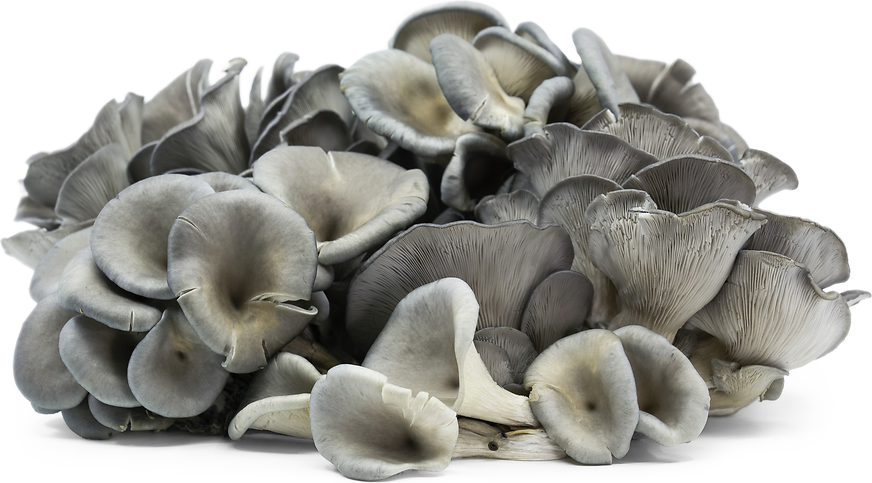
Grey Oyster Mushrooms – Pleurotus Ostreatus
Pleurotus ostreatus, the oyster mushroom, oyster fungus, hiratake, or pearl oyster mushroom is a common edible mushroom. It is one of the more commonly sought wild mushrooms, though it can also be cultivated on straw and other media.
Before we dive in, a quick note:
We hope you’ll enjoy learning about mushrooms as much as we do! Please know that all information shared here by Cellar Mushrooms is for educational purposes only and is not meant to provide or take the place of medical advice. It is not meant to diagnose, treat, cure, or prevent any disease.
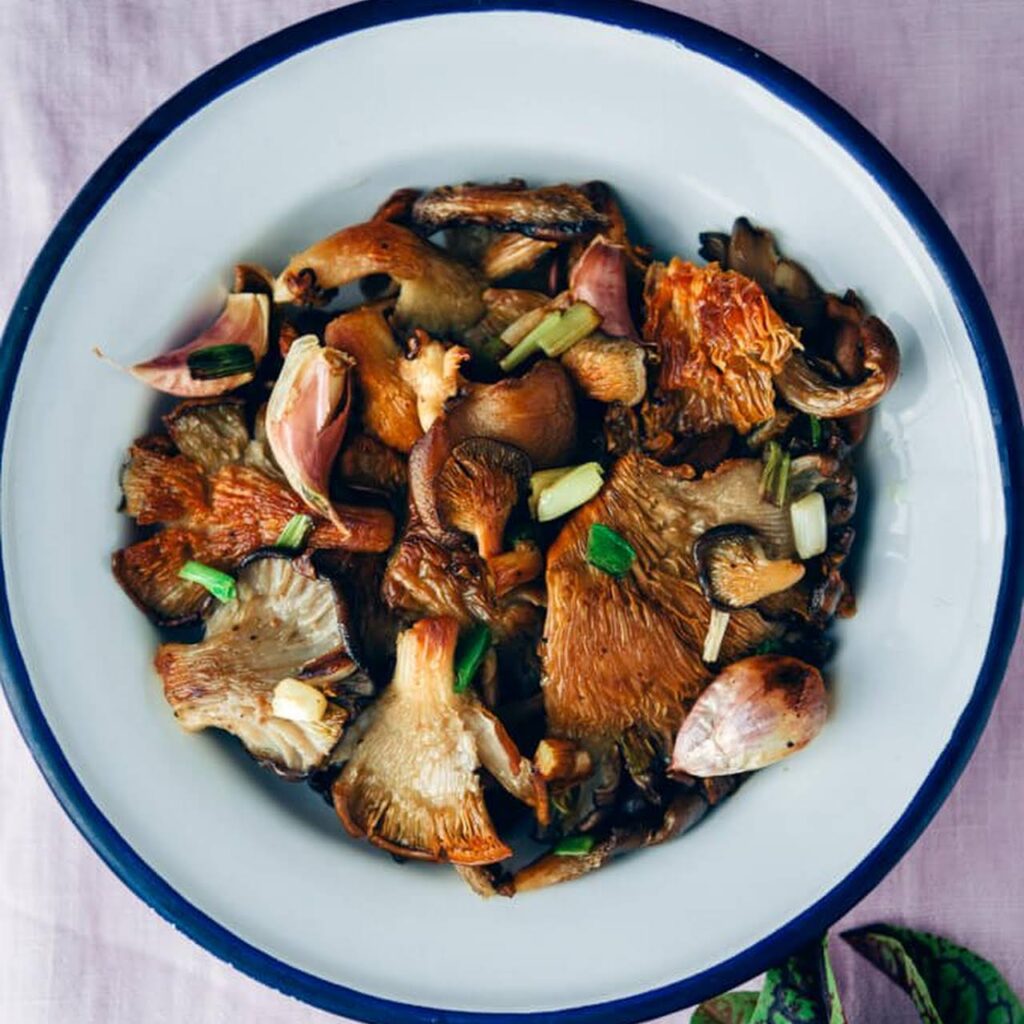
- Grey Oyster mushrooms have a very mild flavour. Similar to field mushrooms, but more delicate and complex.
- Cooking with a higher heat, they tend to be more earthy, aromatic, a bit sweet, and, sometimes a hint of anise.
- More gentle heat will produce more delicate tones and helps to bring out a subtle briny flavour which is why they work well in combination with seafood, or as a fish replacement.
- The texture of the Grey Oyster mushroom is where it stands out, making it very different from a field mushroom. It does not have a spongy texture, rather it is ‘fleshy’, with a soft creamy texture. In many respects, its texture is similar to meat like chicken, which is why it is such a popular meat replacement.
- They are very easy to cook with, and the results will always be a perfect texture and flavour.
Nutritional Value:
Oyster mushrooms contain high amounts of amino acids (protein) such as thiamin, riboflavin, folic acid, sterols, and carotenoids. They contain high levels of vitamin C, potassium and iron.
Oyster mushrooms have been scientifically validated to boost the immune system and fight infection and inflammation. They may have medicinal uses for reducing pain sensitivity.
Oyster mushrooms are primarily made up of protein and complex carbohydrates and are one of the best sources of ergothioneine, a unique antioxidant found only in fungi.
Ergothioneine has been shown to help fight chronic inflammation and may prevent the build-up of plaque in the arteries, which leads to cardiovascular disease.