
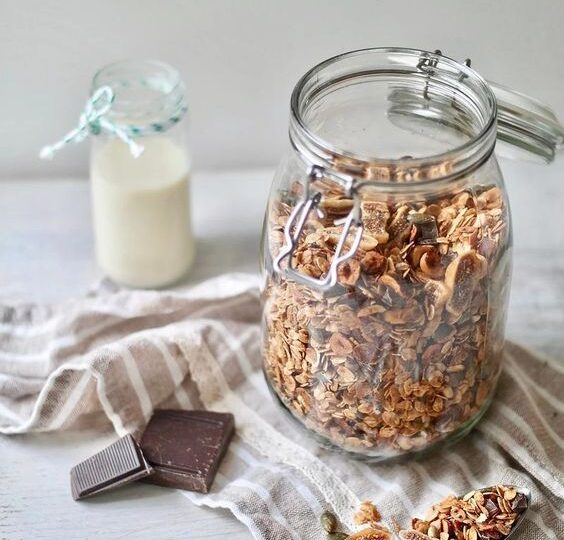
Organic Meusli
Organic muesli is a popular and nutritious breakfast cereal that typically consists of a combination of whole grains, dried fruits, nuts, and seeds. What sets organic muesli apart from conventional muesli is the use of organic ingredients in its production.
Here’s an explanation of the key components of organic muesli:
- Whole Grains: Organic muesli typically includes whole grains like rolled oats, barley, rye, or spelt. These grains provide a good source of complex carbohydrates, fiber, and various vitamins and minerals.
- Dried Fruits: Organic muesli often contains dried fruits such as raisins, apricots, dates, figs, or cranberries. These dried fruits add natural sweetness and a burst of flavor to the muesli while providing essential nutrients and dietary fiber.
- Nuts and Seeds: Ingredients like almonds, walnuts, sunflower seeds, pumpkin seeds, and flax seeds are common in organic muesli. These nuts and seeds contribute healthy fats, protein, and additional nutritional value to the mix.
- Organic Certification: The “organic” label indicates that the ingredients used in the muesli have been produced and processed according to organic farming practices. Organic farming typically avoids synthetic pesticides, herbicides, and genetically modified organisms (GMOs). It promotes sustainable and environmentally friendly agricultural methods.
- No Artificial Additives: Organic muesli is generally free from artificial flavors, colors, and preservatives. It’s made with natural ingredients to offer a wholesome and healthy breakfast option.
- Customizable: Organic muesli can be customized to suit individual preferences. You can add fresh fruits, yogurt, milk, or plant-based milk alternatives to create your preferred texture and taste.
Organic muesli is often considered a nutritious and versatile breakfast choice due to its high fiber content, essential nutrients, and the absence of synthetic chemicals commonly used in conventional agriculture. It provides sustained energy and can be a part of a balanced diet. However, it’s essential to check the product label to ensure that it meets your specific dietary preferences and nutritional needs, as the exact ingredients and nutritional content may vary from brand to brand.